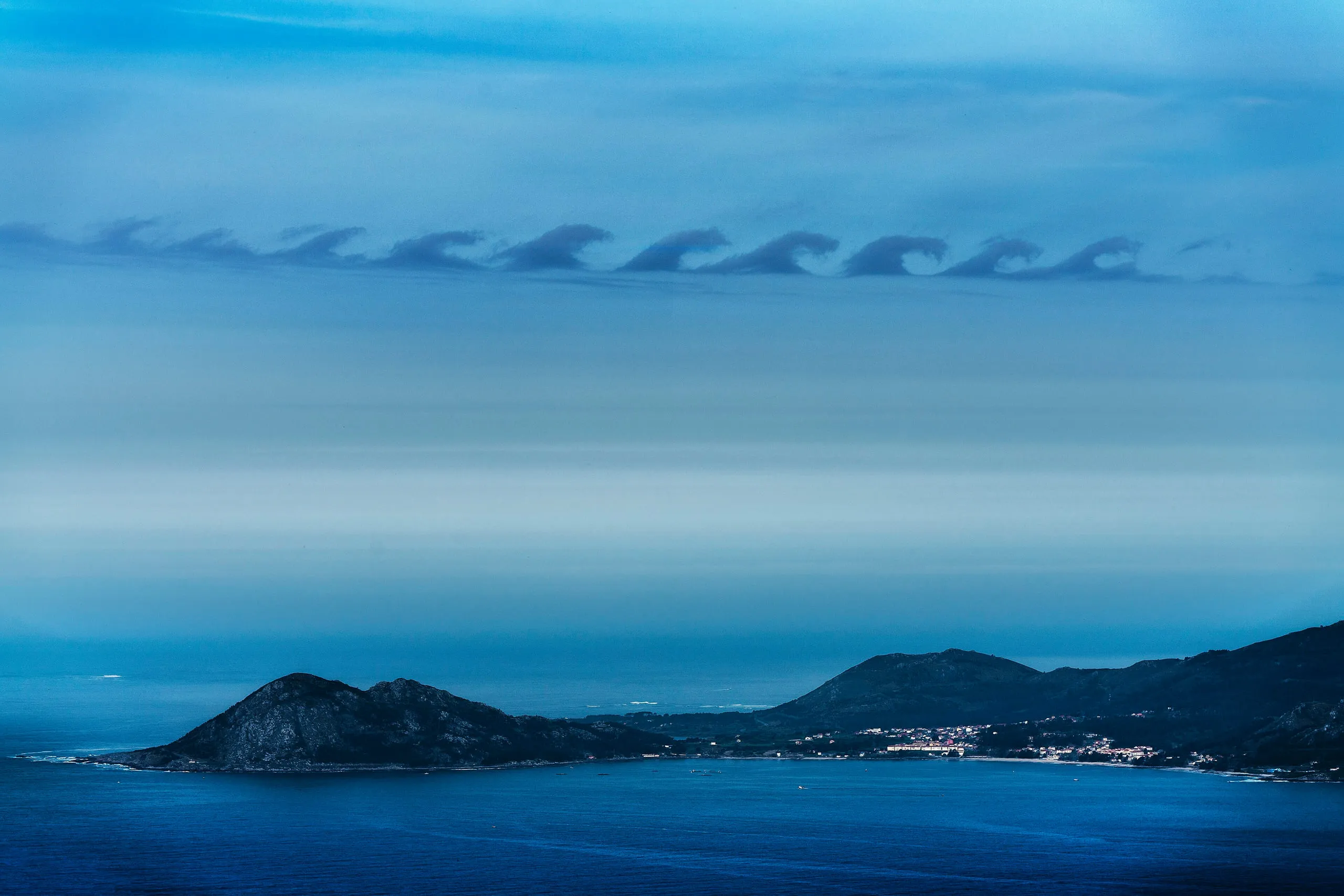
Kelvin-Helmholtz clouds — officially named fluctus — are a rare and fleeting sight: a neat row of curling crests that look exactly like ocean waves about to break. They form at the boundary between two layers of air sliding past each other at different speeds, where the faster upper layer rolls the cloud tops over into breaking waves. They usually last only a minute or two before smearing away.
How to tell it apart
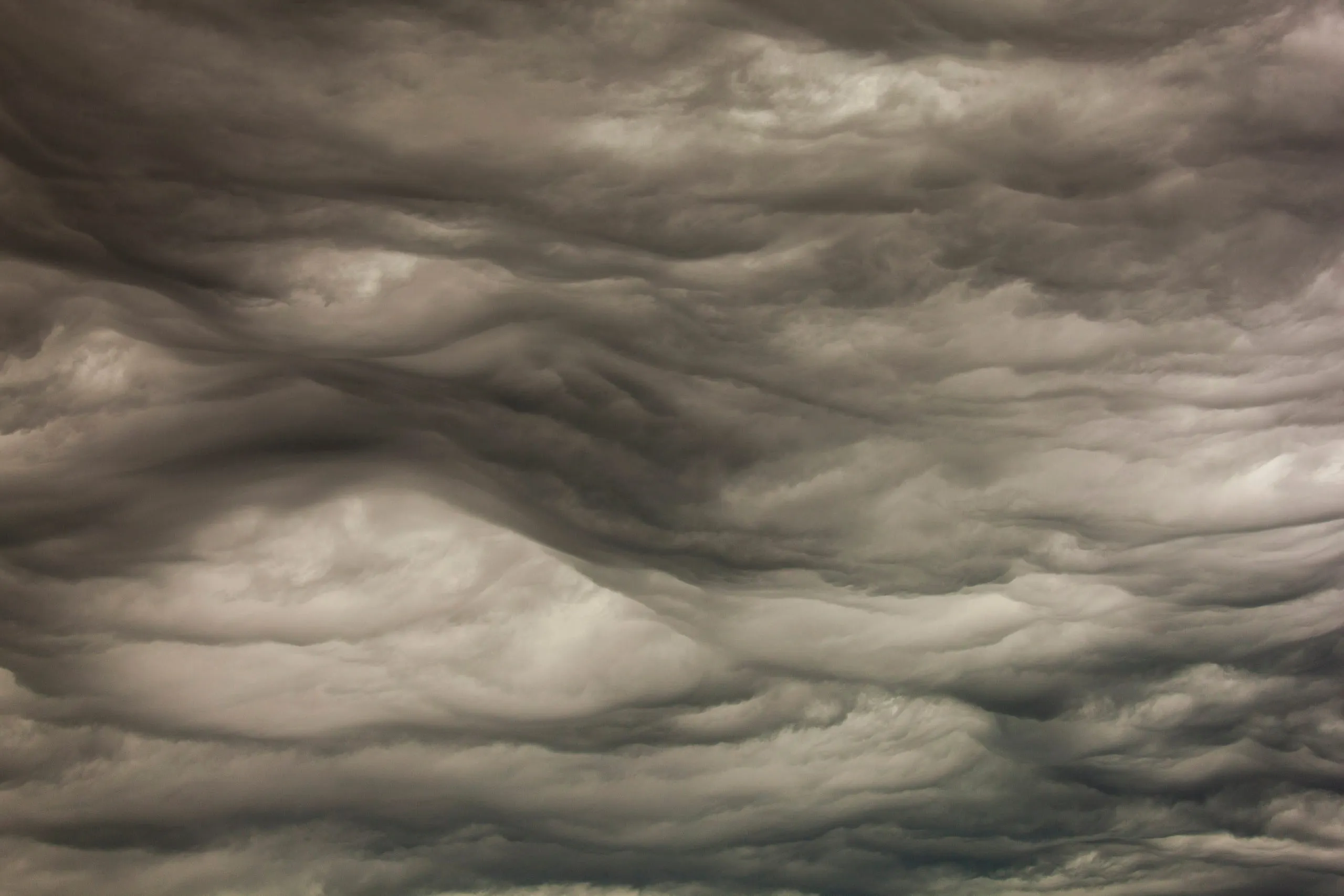
Kelvin-Helmholtz is regularly confused with the entries below. Compare the plates before you commit to a name.
The same Kelvin-Helmholtz instability that curls these clouds also ripples the boundary between ocean and air, stirs the solar wind, and helps shape the banded clouds of Jupiter and Saturn.
Note
Still unsure it's the same cloud? Our app, Cloud Point— on iOS and Android — reads a photo and returns the likely type with altitude, useful when a formation is fading faster than you can look it up.

.jpg)