Cloud PointField Guide

Supplementary feature

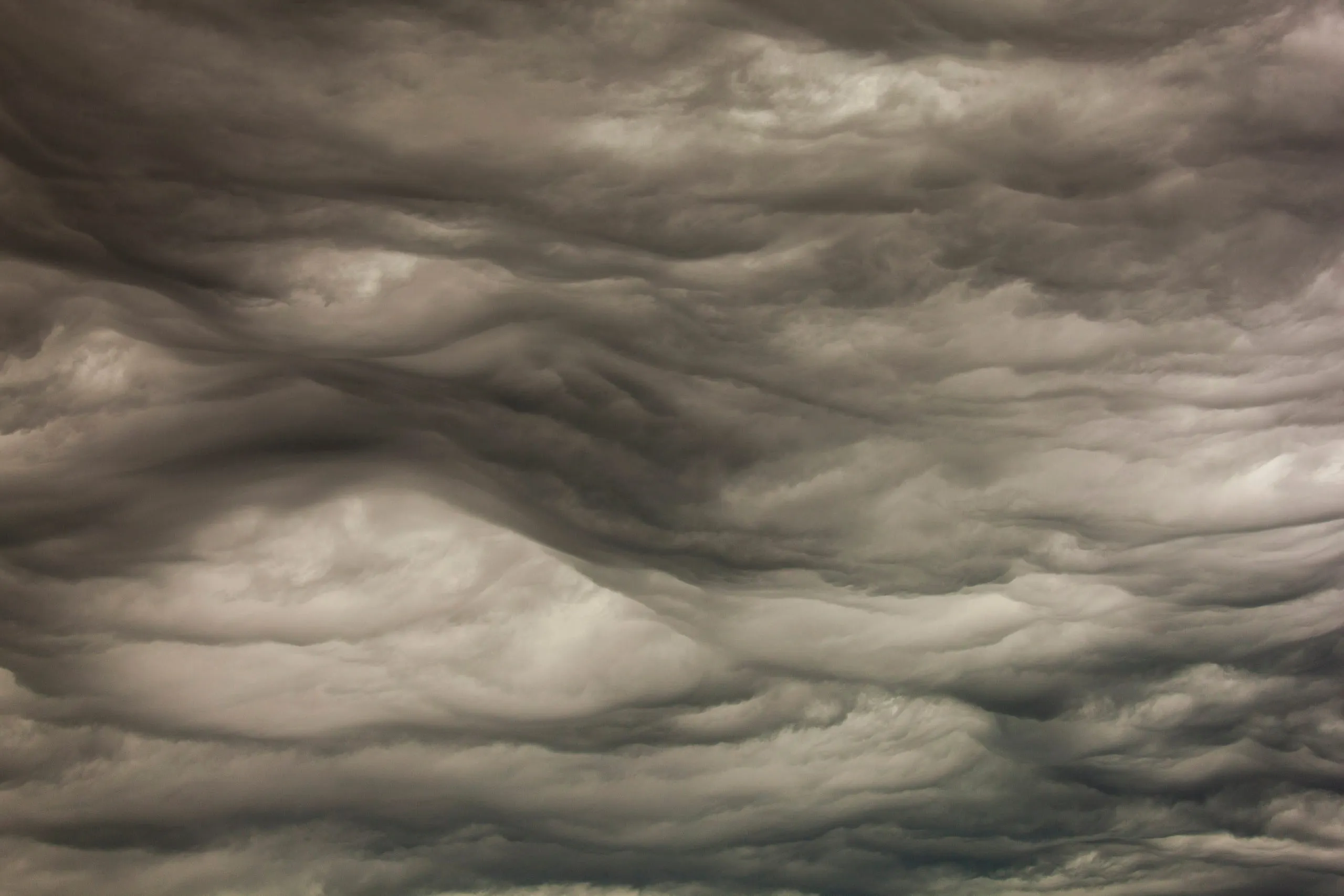
Asperitas

The newest, most ominous wavy underside

Written by Laurence WayneEntry No. 10Rare

Asperitas: The newest, most ominous wavy underside
Plate XPhotograph by David Zhang, CC BY-SA 2.0.

Asperitas is a dramatic, chaotic rippling of a cloud's underside that looks for all the world like the surface of a stormy sea viewed from below. It forms on the base of stratocumulus or altocumulus, where wave motions in the air churn the cloud into rolling, dipping folds. Despite its menacing appearance, it almost always melts away without any storm developing.

Worth knowing

  • Asperitas owes its place in the record books to amateur sky-watchers: championed by the Cloud Appreciation Society, in 2017 it became the first wholly new cloud feature added to the WMO International Cloud Atlas since 1951.
Note

Still unsure it's the same cloud? Our app, Cloud Point— on iOS and Android — reads a photo and returns the likely type with altitude, useful when a formation is fading faster than you can look it up.
Test yourselfThree levels

Choose a difficulty

What does asperitas look like?

  1. aA wildly rippled cloud underside resembling a rough sea seen from below
  2. bA neat coloured ring around the moon
  3. cA single small puffy white cloud
  4. dA thin icy streak high in the sky
Show answer

AnswerA wildly rippled cloud underside resembling a rough sea seen from below

Asperitas appears as a turbulent, wave-like cloud base that looks like the underside of a choppy sea.

What shapes the rolling folds of asperitas?

  1. aWave motions in the air distorting the cloud base
  2. bHailstones falling through the cloud
  3. cLightning heating the cloud from within
  4. dAircraft flying through it
Show answer

AnswerWave motions in the air distorting the cloud base

Asperitas is thought to form when waves in the air — often linked to wind shear — churn and distort the underside of the cloud into its rolling, chaotic folds.

Asperitas is often read as a sign of imminent severe weather. What is the reality?

  1. aIt reliably precedes tornadoes
  2. bIt usually disperses without a storm, and its exact cause is still not fully understood
  3. cIt only ever forms inside hurricanes
  4. dIt guarantees hail within the hour
Show answer

AnswerIt usually disperses without a storm, and its exact cause is still not fully understood

Although it looks like the prelude to a violent storm, asperitas typically clears without one — and meteorologists have not yet fully pinned down the precise mechanism that creates it.

Nearby in the guide