Cloud PointField Guide

Accessory cloud — velum

Velum

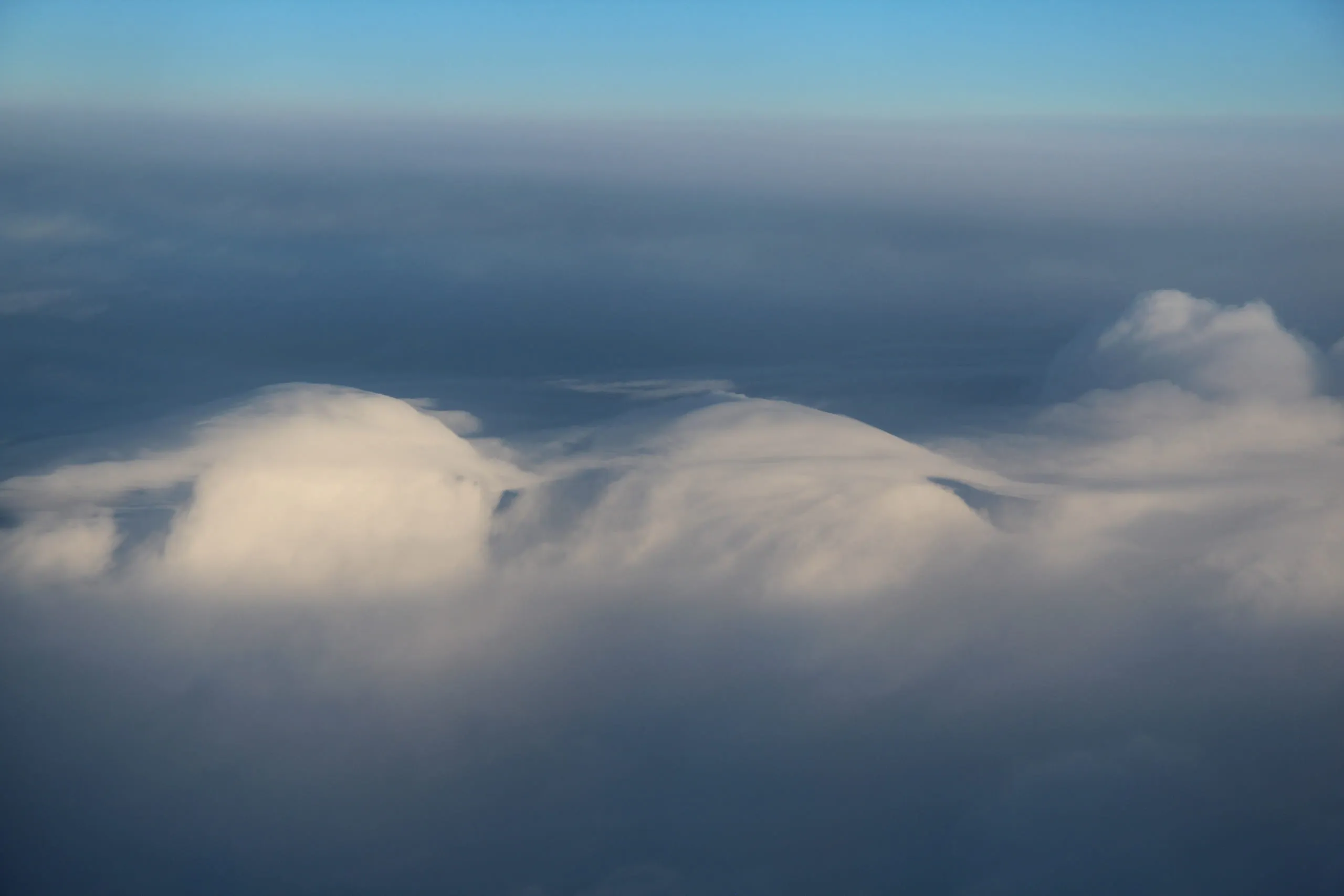
The thin veil draped through a storm tower

Written by Laurence WayneEntry No. 50Uncommon

Velum: The thin veil draped through a storm tower
Plate LPhotograph by GerritR, CC BY-SA 4.0.

Velum is an accessory cloud veil of great horizontal extent, lying close above or attached to the upper part of one or several cumuliform clouds, which often pierce through it. It forms when a moist, stable layer of air is lifted and condenses around growing convective towers, leaving a thin horizontal sheet stretched between or across them. It is distinguished from pileus mainly by its much greater horizontal spread — a long veil rather than a small cap.

Worth knowing

  • Velum and pileus are close cousins formed by the same lifting, but the WMO separates them purely by scale — velum is a wide veil of great horizontal extent, while pileus is a small cap. Both occur principally with cumulus and cumulonimbus.
Note

Still unsure it's the same cloud? Our app, Cloud Point— on iOS and Android — reads a photo and returns the likely type with altitude, useful when a formation is fading faster than you can look it up.
Test yourselfThree levels

Choose a difficulty

A velum cloud appears as what, relative to a tall convective cloud?

  1. aA funnel beneath it
  2. bA wide thin horizontal veil across or beside it
  3. cA ring around the sun
  4. dRain shafts below it
Show answer

AnswerA wide thin horizontal veil across or beside it

Velum is a horizontally extensive veil close to the upper part of cumuliform clouds.

Velum and pileus form by the same process. How does the WMO tell them apart?

  1. aVelum is ice, pileus is water
  2. bBy horizontal extent — velum is a wide veil, pileus is a small cap
  3. cVelum forms at night, pileus by day
  4. dVelum produces lightning
Show answer

AnswerBy horizontal extent — velum is a wide veil, pileus is a small cap

The distinction is scale: great horizontal extent (velum) versus a small cap (pileus).

A velum draped across storm towers tells you what about the surrounding air?

  1. aThe whole atmosphere is bone dry
  2. bThere is a moist, stable layer that the convective towers have grown up through
  3. cThe storm has already completely collapsed
  4. dOnly thin ice clouds remain in the sky
Show answer

AnswerThere is a moist, stable layer that the convective towers have grown up through

A velum forms where rising towers lift a moist, stable layer to saturation, so seeing one reveals that humid, stable air aloft is being penetrated by the convection.

Nearby in the guide