Cloud PointField Guide

Ground-level ice crystals

Diamond dust

Glittering airborne ice that makes halos at eye level

Written by Laurence WayneEntry No. 23Uncommon

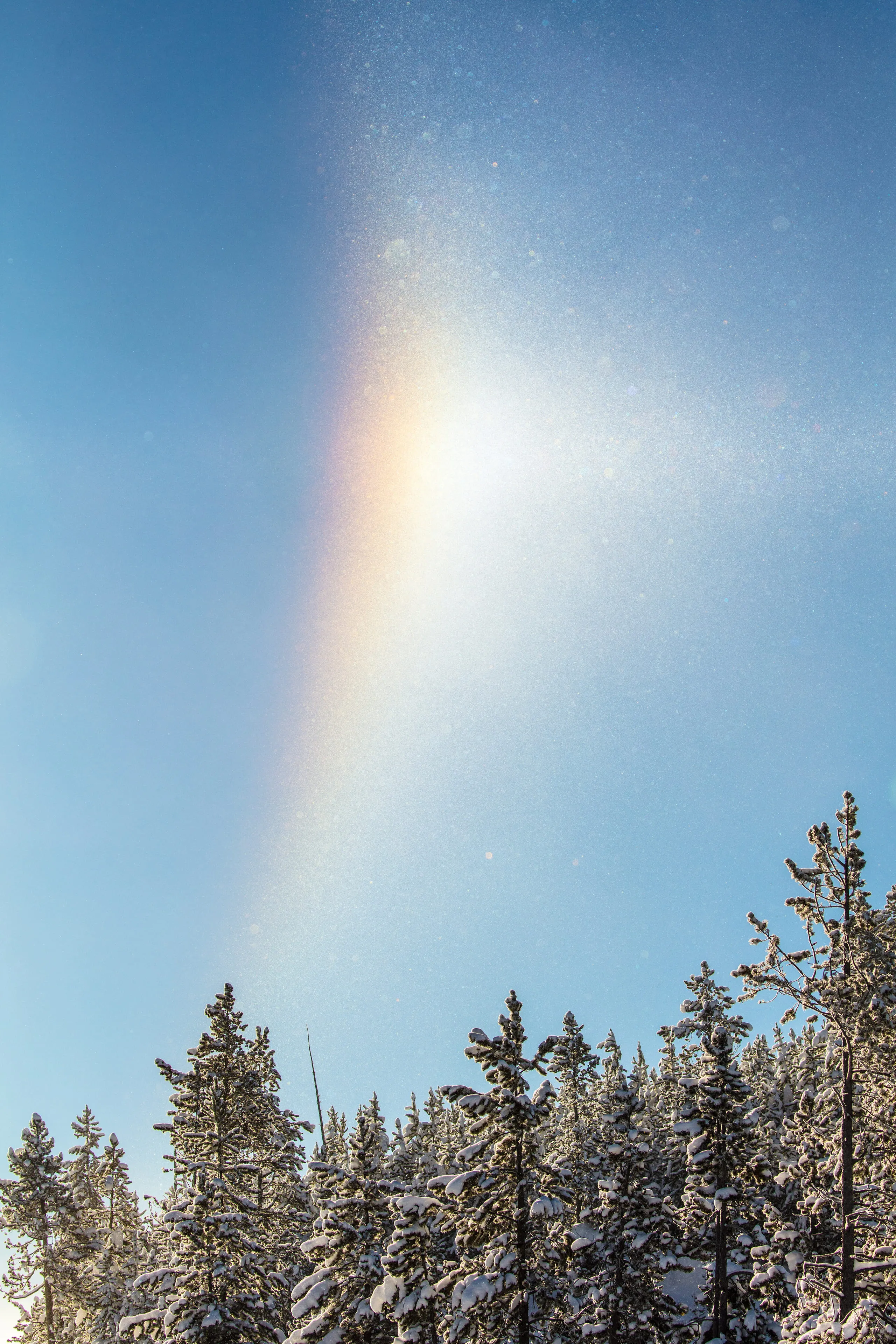
Diamond dust: Glittering airborne ice that makes halos at eye level
Plate XXIIIPhotograph by Jacob W. Frank, Public domain.

Diamond dust is a ground-level cloud of tiny ice crystals that glitters like floating glitter in the sunshine of very cold, clear days. It forms in frigid polar and high-altitude air when slightly warmer, moister air mixes down and tips the cold near-surface air past ice saturation. Because it is essentially precipitation falling from a clear sky, it can throw halos, sun dogs and light pillars right down at eye level.

Worth knowing

  • Diamond dust is officially 'clear-sky precipitation' — ice that falls with no cloud overhead. Because its flat crystals act like the prisms in high cirrus, it can scatter halos, sun dogs and light pillars close enough to walk through.
Note

Still unsure it's the same cloud? Our app, Cloud Point— on iOS and Android — reads a photo and returns the likely type with altitude, useful when a formation is fading faster than you can look it up.
Test yourselfThree levels

Choose a difficulty

What is diamond dust?

  1. aA glittering haze of tiny ice crystals near the ground in very cold, clear air
  2. bA heavy snowstorm
  3. cA bright ring around the moon
  4. dA low grey rain cloud
Show answer

AnswerA glittering haze of tiny ice crystals near the ground in very cold, clear air

Diamond dust is a ground-level scattering of tiny ice crystals that sparkles in sunlight under an otherwise clear, frigid sky.

How does diamond dust form?

  1. aHeavy snow clouds rolling in off the sea
  2. bSlightly warmer, moister air mixing down into frigid surface air and pushing it past ice saturation
  3. cSea spray freezing in the wind
  4. dRain freezing the instant it lands
Show answer

AnswerSlightly warmer, moister air mixing down into frigid surface air and pushing it past ice saturation

In very cold, calm conditions a touch of warmer, moister air mixes down toward the surface; the added vapour tips the icy near-surface air past saturation, so ice crystals form and slowly drift down.

What is surprising about diamond dust compared with ordinary precipitation?

  1. aIt only falls at night
  2. bIt is precipitation that falls from an essentially clear sky, and its crystals can make halos and sun dogs at ground level
  3. cIt is made of liquid water rather than ice
  4. dIt falls upward instead of down
Show answer

AnswerIt is precipitation that falls from an essentially clear sky, and its crystals can make halos and sun dogs at ground level

Unlike rain or snow, diamond dust falls with no cloud overhead — it's classed as clear-sky precipitation. Its plate-like crystals refract light just as cirrus does, producing halos, sun dogs and light pillars at eye level.

Nearby in the guide