Cloud PointField Guide

Low cloud — genus

Cumulus

The classic fair-weather puffball

Written by Laurence WayneEntry No. 1Common

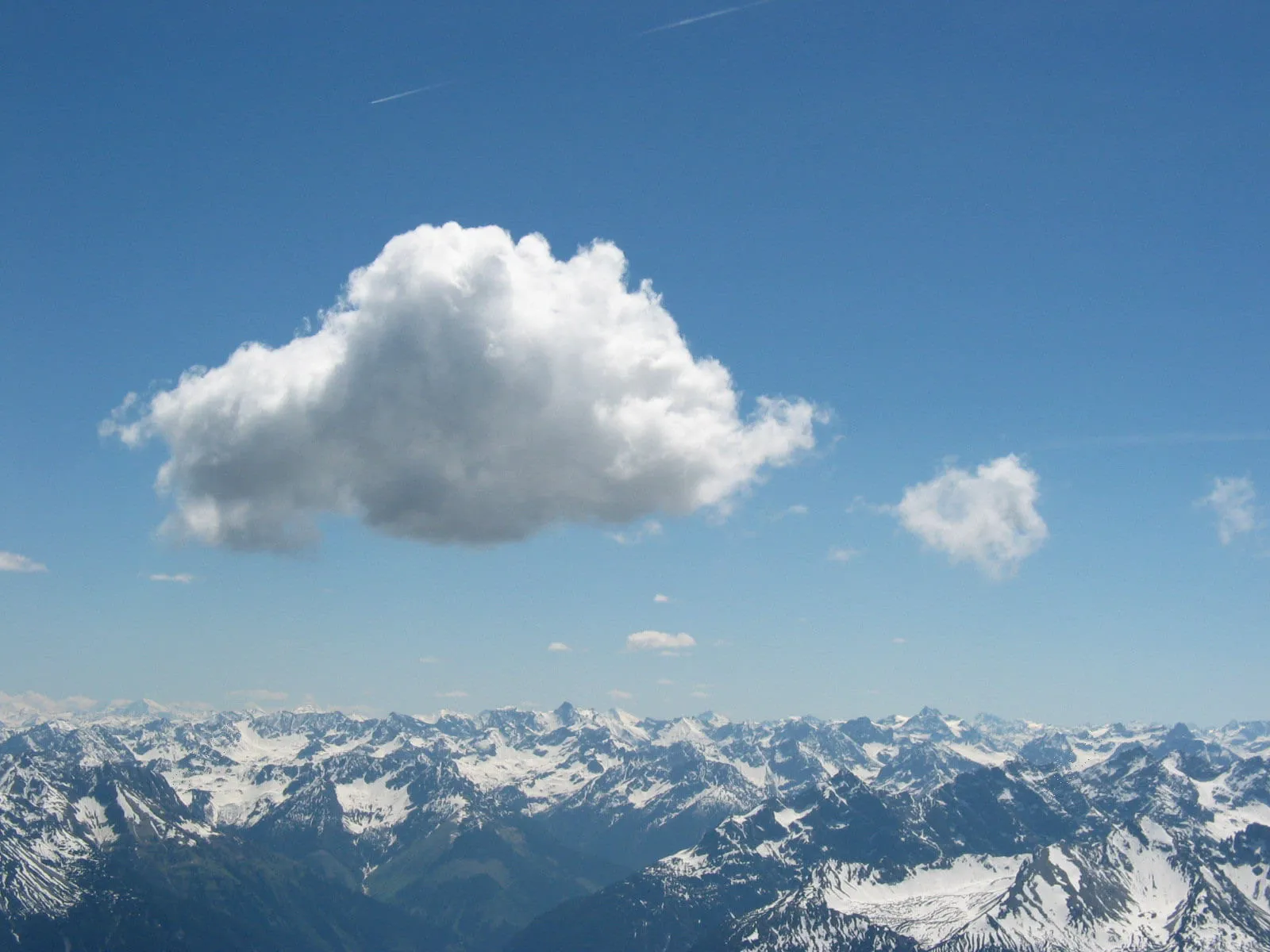
Cumulus: The classic fair-weather puffball
Plate IPhotograph by Glg, CC BY-SA 2.0 DE.

Cumulus are the clouds children draw: bright white, cauliflower tops with flat, slightly darker bases. They form when warm air rises from the ground, cools, and its moisture condenses into droplets. On a sunny day they bubble up through the morning and afternoon, marking columns of rising warm air called thermals.

Worth knowing

  • A typical cumulus cloud weighs about 500,000 kg - roughly the same as 100 elephants!
  • They can form and dissipate within just 15 minutes.
  • Cumulus clouds are the 'building blocks' that can develop into massive cumulonimbus thunderstorms.
  • Glider pilots seek out cumulus clouds because the rising warm air beneath them provides lift.
Note

Still unsure it's the same cloud? Our app, Cloud Point— on iOS and Android — reads a photo and returns the likely type with altitude, useful when a formation is fading faster than you can look it up.
In motion

Test yourselfThree levels

Choose a difficulty

Cumulus clouds are most associated with which kind of weather?

  1. aFair, dry weather
  2. bHeavy continuous rain
  3. cFreezing fog
  4. dSnow blizzards
Show answer

AnswerFair, dry weather

Cumulus are the classic fair-weather clouds — small, puffy and well separated, they bubble up on sunny days with light winds and usually bring no rain.

What process is mainly responsible for the formation of cumulus clouds on a sunny day?

  1. aCold air sinking and compressing near the ground
  2. bWarm air rising, cooling, and its moisture condensing
  3. cIce crystals falling from higher cloud layers
  4. dSea spray being lifted by coastal winds
Show answer

AnswerWarm air rising, cooling, and its moisture condensing

Cumulus form by convection: the sun heats the ground, warm air rises in thermals, cools as it climbs, and the water vapour it carries condenses into the droplets that make the fluffy cloud.

Why do the cumulus clouds across a sky often share a flat base at roughly the same height?

  1. aThey are resting on a layer of warmer air below them
  2. bEach rising thermal cools to its dew point at the same altitude — the lifting condensation level
  3. cThe sun heats them evenly from above
  4. dHigh-altitude winds shear their bottoms flat
Show answer

AnswerEach rising thermal cools to its dew point at the same altitude — the lifting condensation level

The flat base marks the lifting condensation level — the height at which rising air cools enough for its moisture to condense. Because air near the ground shares similar temperature and humidity, thermals reach that level at nearly the same altitude.

Nearby in the guide