Cloud PointField Guide

Surface-level stratus

Fog

Cloud at ground level

Written by Laurence WayneEntry No. 9Common

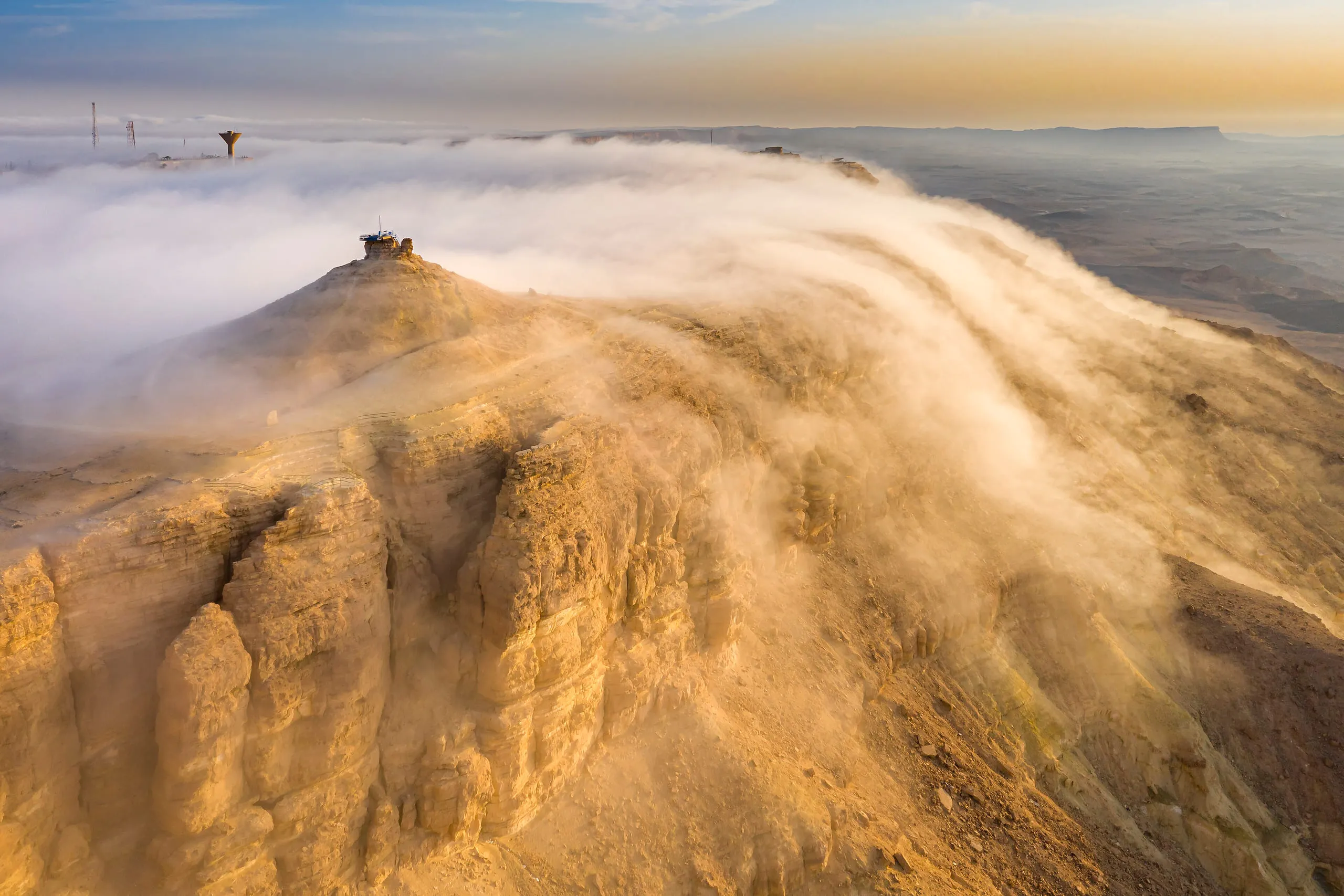
Fog: Cloud at ground level
Plate IXPhotograph by Giladtop, CC BY-SA 4.0.

Fog is simply a cloud that forms at ground level, made of tiny water droplets that cut visibility to less than a kilometre. The two most common kinds form in opposite ways: radiation fog settles into valleys on clear, calm nights as the ground radiates away its heat, while advection fog rolls in when warm, moist air drifts over a cold surface such as the sea. One burns off by mid-morning; the other can linger for days.

Worth knowing

  • There is an official line between fog and mist: by international convention it is only called 'fog' once visibility drops below 1 km. Above that threshold, the very same haze is properly called mist.
Note

Still unsure it's the same cloud? Our app, Cloud Point— on iOS and Android — reads a photo and returns the likely type with altitude, useful when a formation is fading faster than you can look it up.
Test yourselfThree levels

Choose a difficulty

What exactly is fog?

  1. aA cloud that forms at ground level
  2. bSmoke drifting from fires
  3. cA form of frozen rain
  4. dA high-altitude ice cloud
Show answer

AnswerA cloud that forms at ground level

Fog is a cloud at the surface — the same suspended water droplets, just down at ground level, reducing visibility.

How does radiation fog form on a clear, calm night?

  1. aWarm air blowing over a cold sea
  2. bThe ground radiates away its heat, chilling the air just above it to its dew point
  3. cRain evaporating as it falls
  4. dWind lifting sea spray into the air
Show answer

AnswerThe ground radiates away its heat, chilling the air just above it to its dew point

On clear, calm nights the ground loses heat by radiation and cools the air just above it. When that air reaches its dew point, its moisture condenses into fog.

A breeze and an overcast sky will usually clear radiation fog — yet the same conditions can sustain advection fog. Why?

  1. aAdvection fog is made of ice, not water
  2. bAdvection fog is cooled by the cold surface it flows over, not by radiation, so wind merely spreads it
  3. cAdvection fog is held aloft by sunlight
  4. dThere is no real difference between the two
Show answer

AnswerAdvection fog is cooled by the cold surface it flows over, not by radiation, so wind merely spreads it

Radiation fog depends on calm air and clear skies to let the ground cool. Advection fog gets its cooling from the cold surface beneath it, so wind doesn't destroy it — it just carries the fog further.

Nearby in the guide