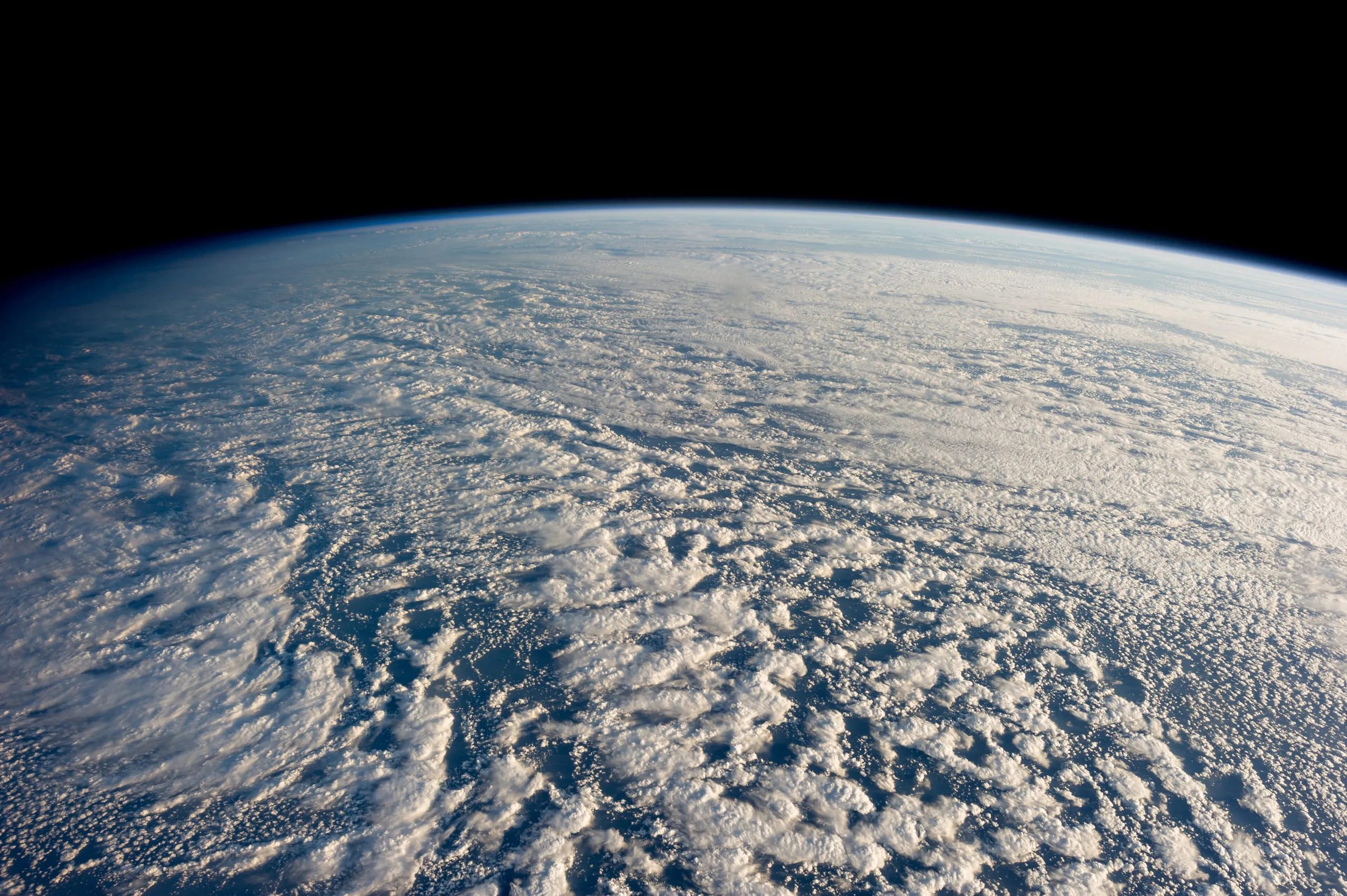
Stratocumulus is the low, lumpy grey layer that blankets the sky on so many overcast days — arguably the most common cloud on Earth. It forms when gentle convection near the ground is trapped beneath a lid of warmer air, so the cloud spreads sideways into rolls and patches rather than building upward. Look for rounded clumps with cracks of brighter sky or darker shading between them.
Worth knowing
Stratocumulus covers about 20% of Earth's surface at any given time - more than any other cloud!
They play a crucial role in climate by reflecting sunlight back to space, helping cool the planet.
Airplane passengers often see beautiful stratocumulus 'cloud seas' below them on flights.
The gaps between cloud elements often align in rows parallel to the wind direction.
Note
Still unsure it's the same cloud? Our app, Cloud Point— on iOS and Android — reads a photo and returns the likely type with altitude, useful when a formation is fading faster than you can look it up.