Cloud PointField Guide

Supplementary feature

Virga

Rain that falls but never lands

Written by Laurence WayneEntry No. 22Common

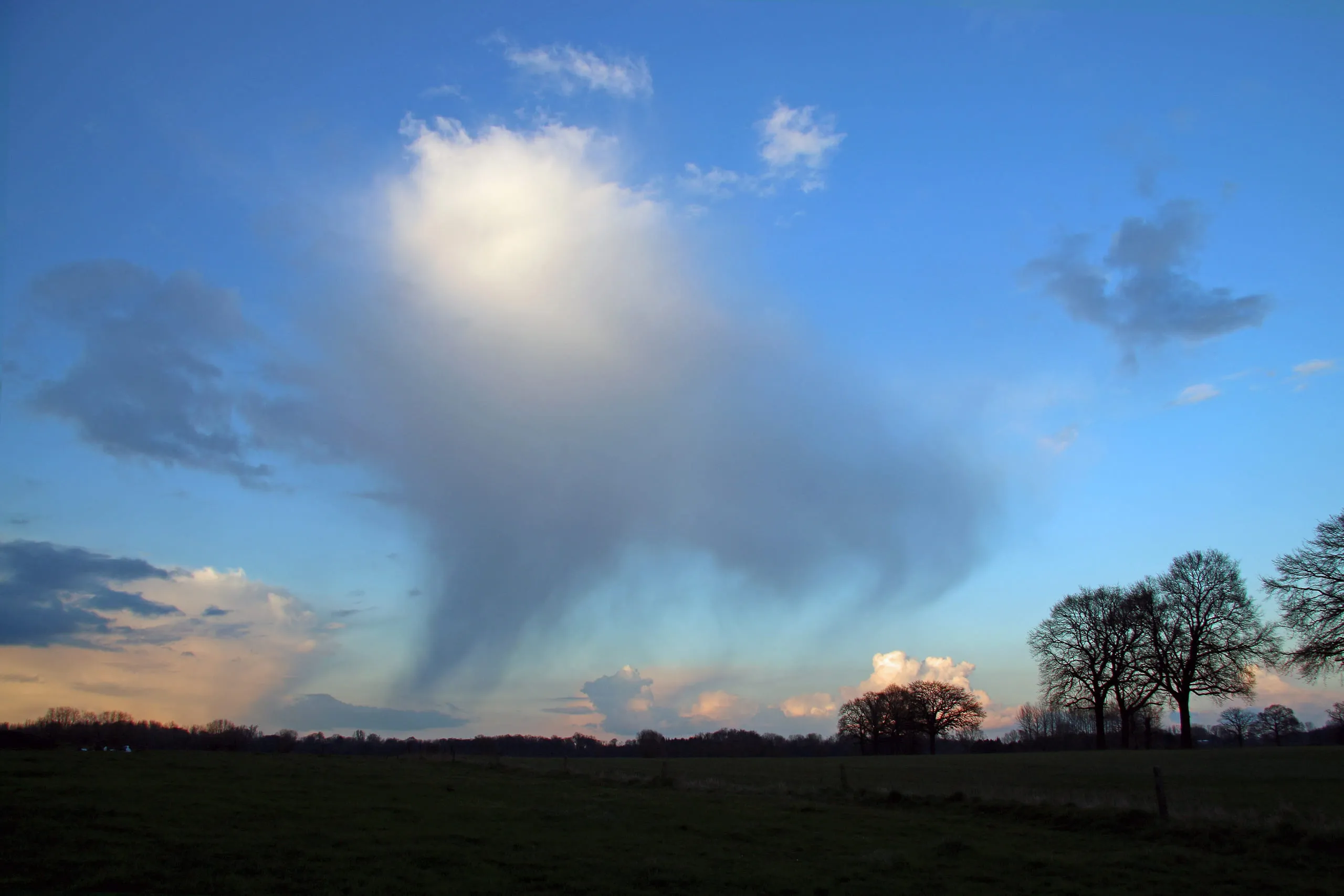
Virga: Rain that falls but never lands
Plate XXIIPhotograph by Sally V, CC BY-SA 4.0.

Virga is precipitation — rain, drizzle or snow — that falls from a cloud in trailing streaks but evaporates away before it reaches the ground. It shows up as wispy tails hanging beneath a cloud base that clearly fade out partway down. It is most striking over dry regions, where a deep layer of dry air below the cloud dries the falling drops to nothing.

Worth knowing

  • Virga isn't always harmless: as the falling drops evaporate they chill the air, which can then plunge downward as a sudden, dangerous 'dry microburst' — a serious hazard for aircraft near the ground.
Note

Still unsure it's the same cloud? Our app, Cloud Point— on iOS and Android — reads a photo and returns the likely type with altitude, useful when a formation is fading faster than you can look it up.
Test yourselfThree levels

Choose a difficulty

What is virga?

  1. aStreaks of rain or snow that fall from a cloud but evaporate before reaching the ground
  2. bA coloured ring around the sun
  3. cA low bank of fog
  4. dA breaking-wave cloud
Show answer

AnswerStreaks of rain or snow that fall from a cloud but evaporate before reaching the ground

Virga appears as wispy trailing tails beneath a cloud that clearly fade out and stop before touching the ground.

Why does the precipitation in virga never reach the ground?

  1. aIt is blown sideways by the wind forever
  2. bIt falls into a layer of dry air and evaporates (or sublimates) before it can land
  3. cIt freezes into a solid sheet in mid-air
  4. dThe cloud sucks it back up
Show answer

AnswerIt falls into a layer of dry air and evaporates (or sublimates) before it can land

The rain or snow falls from the cloud into dry air below; because that air isn't saturated, the drops or crystals evaporate or sublimate away before they reach the surface.

Virga from a high-based shower can trigger a sudden, violent downdraught. What is the chain of events?

  1. aThe rain freezes into a falling block of ice
  2. bEvaporating and sublimating precipitation cools the air, which turns dense and plunges as a 'dry microburst'
  3. cSunlight heats the virga, pushing air up and then down
  4. dThe virga discharges trapped lightning downward
Show answer

AnswerEvaporating and sublimating precipitation cools the air, which turns dense and plunges as a 'dry microburst'

As the falling precipitation evaporates it chills the surrounding air; that cold, dense air can accelerate downward as a dry microburst — a serious hazard to aircraft.

Nearby in the guide