Cloud PointField Guide

High cloud — genus

Cirrus

Delicate ice-crystal brushstrokes

Written by Laurence WayneEntry No. 6Common

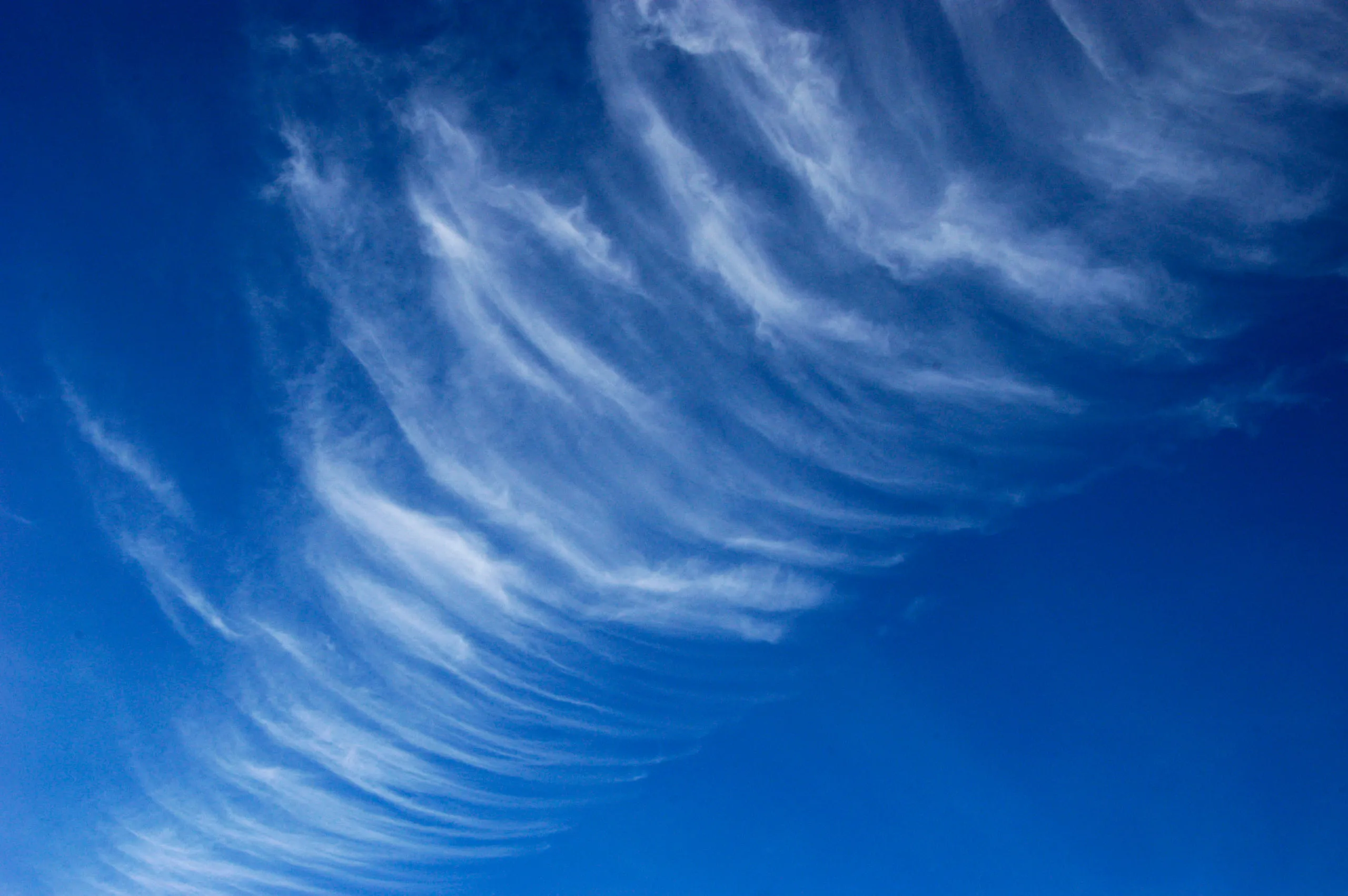
Cirrus: Delicate ice-crystal brushstrokes
Plate VIPhotograph by Simon A. Eugster, CC BY-SA 3.0.

Cirrus are thin, wispy streaks high in the sky, often with feathery tails called 'fall streaks' or mares' tails. Because they form so high, they are made entirely of ice crystals. The streaks are crystals falling and being swept sideways by winds that change speed with height. A spread of cirrus moving in often signals an approaching warm front and a change in the weather.

Worth knowing

  • The ice crystals in cirrus clouds can be up to 3mm long - visible if you could get close enough!
  • Jet streams at cirrus altitude can exceed 400 km/h, stretching these clouds into long streamers.
  • Cirrus clouds exist at temperatures as low as -60°C.
  • They can affect climate by trapping heat from the Earth while reflecting some sunlight back to space.
Note

Still unsure it's the same cloud? Our app, Cloud Point— on iOS and Android — reads a photo and returns the likely type with altitude, useful when a formation is fading faster than you can look it up.
Test yourselfThree levels

Choose a difficulty

Which description best fits cirrus clouds?

  1. aThin, wispy streaks high in the sky
  2. bThick grey rain clouds
  3. cLow, puffy cotton-balls
  4. dA flat, featureless blanket near the ground
Show answer

AnswerThin, wispy streaks high in the sky

Cirrus are delicate, hair-like streaks found high in the sky — their name comes from the Latin for 'curl' or 'lock of hair'.

Why are cirrus clouds made of ice crystals rather than water droplets?

  1. aThey form at very high altitudes where temperatures are well below freezing
  2. bThey are made of frozen sea spray
  3. cThey only appear in winter
  4. dLightning freezes the water inside them
Show answer

AnswerThey form at very high altitudes where temperatures are well below freezing

Cirrus form at 6–12 km up, where air temperatures are far below freezing, so the moisture forms ice crystals directly rather than liquid droplets.

The comma-shaped hooks of cirrus uncinus ('mares' tails') reveal what about the air they hang in?

  1. aThe air is perfectly still at every level
  2. bIce crystals fall into air moving at a different speed below, so wind shear drags the trailing streaks into hooks
  3. cThe crystals are being carried upward by a thermal
  4. dLightning is charging the crystals into curls
Show answer

AnswerIce crystals fall into air moving at a different speed below, so wind shear drags the trailing streaks into hooks

Heavier crystals fall out of the generating tuft into slower-moving air beneath; the difference in wind speed (shear) bends the fallstreaks into the familiar hooks.

Nearby in the guide