Cloud PointField Guide

Multi-level cloud — genus

Cumulonimbus

The towering storm factory

Written by Laurence WayneEntry No. 26Common

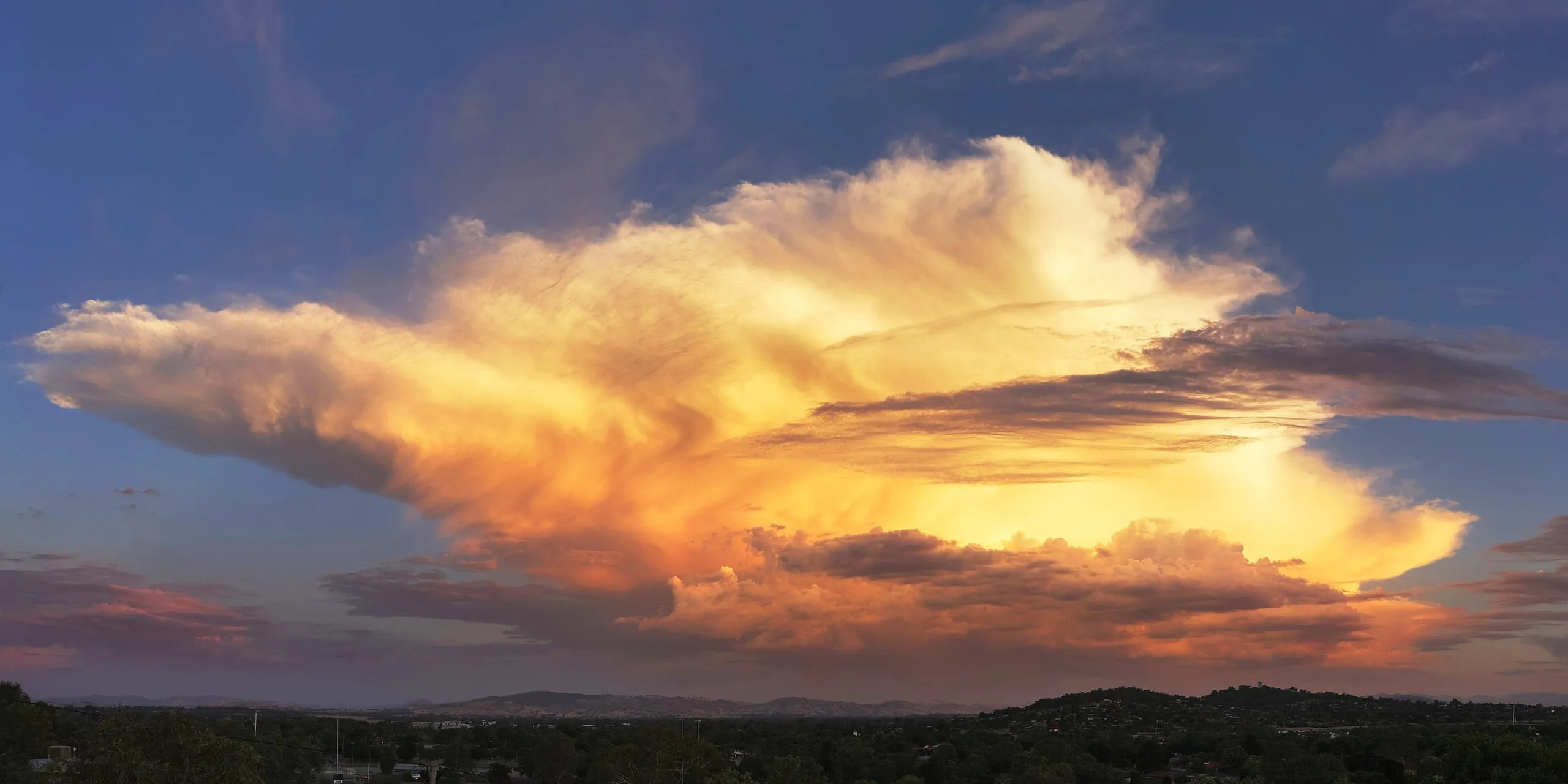
Cumulonimbus: The towering storm factory
Plate XXVIPhotograph by Thennicke, CC BY-SA 4.0.

Cumulonimbus are the giants of the sky — dense, towering clouds that can stretch from near the ground to the top of the troposphere. They are the only cloud that produces hail, thunder and lightning. As powerful updraughts push the cloud upward, its top flattens into a distinctive anvil when it hits the stable air of the tropopause.

Worth knowing

  • Updrafts inside can exceed 160 km/h - strong enough to hold hailstones the size of softballs!
  • A single cumulonimbus can release energy equivalent to 10 Hiroshima-sized atomic bombs.
  • The anvil top can spread over 10km wide and is made entirely of ice crystals.
  • Aircraft avoid these clouds as they contain severe turbulence and can damage planes.
Note

Still unsure it's the same cloud? Our app, Cloud Point— on iOS and Android — reads a photo and returns the likely type with altitude, useful when a formation is fading faster than you can look it up.
Test yourselfThree levels

Choose a difficulty

Which of these is the cumulonimbus the only cloud to produce?

  1. aA rainbow
  2. bThunder and lightning
  3. cMorning dew
  4. dA halo around the sun
Show answer

AnswerThunder and lightning

Cumulonimbus is the only cloud type that generates thunder, lightning and hail — the hallmarks of a full thunderstorm.

What causes the flat 'anvil' shape at the top of a mature cumulonimbus?

  1. aRain washing the top of the cloud flat
  2. bThe cloud freezing solid at high altitude
  3. cRising air spreading sideways when it reaches the stable tropopause
  4. dAircraft cutting through the cloud top
Show answer

AnswerRising air spreading sideways when it reaches the stable tropopause

The cloud's strong updraught rises until it meets the tropopause, a stable layer it cannot easily push through. The air spreads horizontally there, fanning the ice-crystal top into the classic anvil.

In a very strong storm, a dome briefly bulges above the flat anvil. What is it called, and what does it signal?

  1. aA pileus, signalling calm air ahead
  2. bAn overshooting top, signalling an exceptionally powerful updraught
  3. cA mammatus, signalling the storm has ended
  4. dA halo, signalling cold air aloft
Show answer

AnswerAn overshooting top, signalling an exceptionally powerful updraught

When an updraught is strong enough to punch above the tropopause it forms an 'overshooting top' bulging above the anvil. It marks an especially vigorous storm, often one capable of large hail and severe weather.

Nearby in the guide