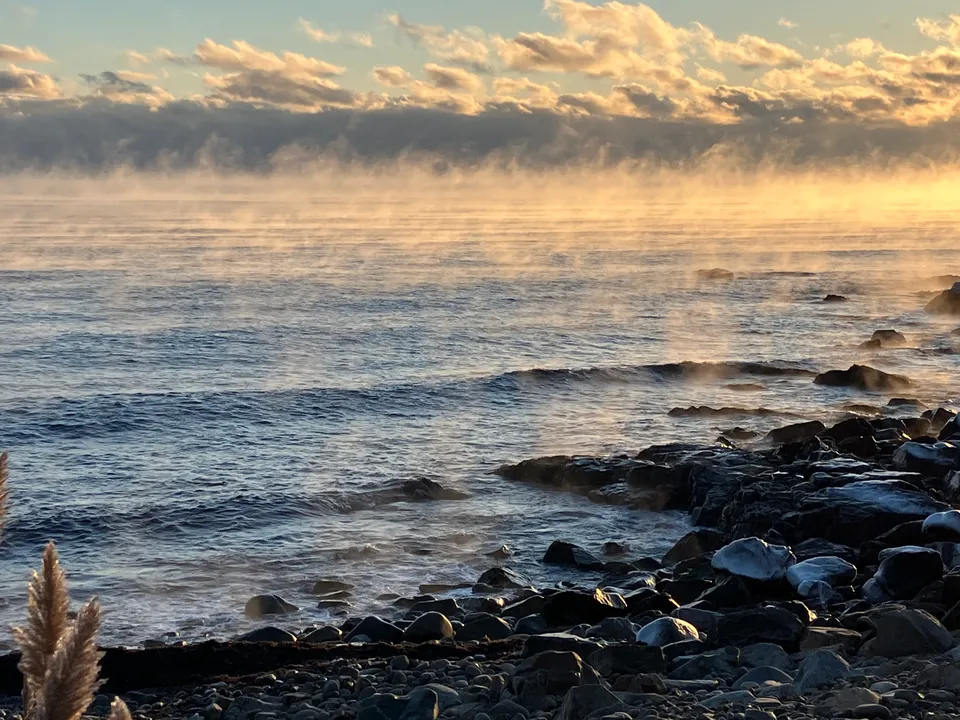
Steam fog forms when very cold air drifts across much warmer open water. Vapour evaporating from the warm surface meets the cold air, instantly saturates it and condenses into rising wisps and columns that look like smoke. Unlike radiation or advection fog, its moisture comes straight off the water — which is why over the sea it is known as sea smoke.
Worth knowing
Steam fog is driven by temperature contrast, not extreme cold: the air only needs to be around 10°C or more colder than the water for the small amount of vapour it picks up to tip it past saturation. Strong steam fog can even spin up little 'steam devils' over the water.
Note
Still unsure it's the same cloud? Our app, Cloud Point— on iOS and Android — reads a photo and returns the likely type with altitude, useful when a formation is fading faster than you can look it up.